
Occupational Therapy
Occupational Therapy at Leo Kanner Center is designed to help children develop the essential skills they need for everyday independence, learning, and participation in daily life. We support children who struggle with motor skills, sensory processing, attention, coordination, and self-care activities.
Our approach is structured, practical, and child-focused. We help children build the skills needed to perform daily activities with confidence at home, school, and in social environments.
📍 Supporting families across Doha including Al Gharrafa, Izghawa, Umm Salal Mohammed, Al Rayyan, and nearby communities
📞 Book an Occupational Therapy assessment today and begin your child’s independence journey
🧠 Introduction: Why Occupational Therapy Matters in Early Development
Occupational Therapy is often misunderstood as therapy only for physical issues. In reality, it is much broader. It focuses on helping children develop the ability to perform everyday tasks that are essential for independence and participation in life.
At Leo Kanner Center, we provide Occupational Therapy for children who experience difficulties in areas such as handwriting, attention, sensory processing, fine motor control, coordination, and self-care skills like dressing or feeding.
Many families visit us after noticing that their child:
- Struggles with holding a pencil or writing clearly
- Avoids certain textures or sounds
- Has difficulty sitting still or focusing
- Finds it hard to manage daily routines independently
We understand how stressful this can be for parents, especially when it starts affecting school performance or daily routines. Our goal is to bridge this gap through structured therapy that builds real-life independence skills.
We do not focus only on exercises. We focus on meaningful participation in life activities.
🎯 Goals of Occupational Therapy
Occupational Therapy at Leo Kanner Center is goal-oriented and tailored to each child’s developmental needs. Our primary focus areas include:
✋ Fine Motor Development Goals
• Improving handwriting and pencil control
• Strengthening hand muscles for better grip
• Enhancing finger coordination for tasks like buttoning or cutting
• Developing precision in small movements
🧠 Sensory Processing Goals
• Helping children respond appropriately to sensory input
• Reducing over-sensitivity to noise, touch, or movement
• Improving tolerance for different textures and environments
• Supporting self-regulation in overstimulating situations
🧍 Daily Living Skills Goals
• Dressing and undressing independently
• Eating skills including utensil use
• Personal hygiene routines
• Organizing school materials and personal belongings
🎯 Attention and Functional Skills Goals
• Improving focus during tasks
• Building task completion ability
• Enhancing classroom readiness
• Supporting structured routine following
✋ Fine Motor Development Goals
• Improving handwriting and pencil control
• Strengthening hand muscles for better grip
• Enhancing finger coordination for tasks like buttoning or cutting
• Developing precision in small movements
🧠 Sensory Processing Goals
• Helping children respond appropriately to sensory input
• Reducing over-sensitivity to noise, touch, or movement
• Improving tolerance for different textures and environments
• Supporting self-regulation in overstimulating situations
🧍 Daily Living Skills Goals
• Dressing and undressing independently
• Eating skills including utensil use
• Personal hygiene routines
• Organizing school materials and personal belongings
🎯 Attention and Functional Skills Goals
• Improving focus during tasks
• Building task completion ability
• Enhancing classroom readiness
• Supporting structured routine following
🧩 Who Benefits from Occupational Therapy
We support children who face challenges in physical coordination, sensory processing, and daily functioning. Common conditions and concerns include:
- Autism Spectrum Disorder (ASD)
- Attention Deficit Hyperactivity Disorder (ADHD)
- Developmental coordination disorder
- Sensory processing difficulties
- Fine motor delays
- Writing and handwriting challenges
- Delayed self-care skills
We also support children who may not have a formal diagnosis but struggle with school participation, motor tasks, or daily independence.
Early support is especially important when challenges begin affecting academic performance or emotional confidence.
We work closely with families across different parts of Doha who often face similar developmental concerns but in different environments.
Many children we support come from areas such as:
- Al Gharrafa near major school clusters
- Izghawa residential neighborhoods
- Umm Salal Mohammed and Umm Salal Ali communities
- Al Rayyan family districts
- Madinat Khalifa school zones
- Education City surrounding areas
Parents in these areas often report concerns related to school readiness, handwriting difficulties, or sensory sensitivities that affect classroom participation.
We also understand school expectations in local academic settings and help children develop skills that directly improve classroom performance and independence.
📍 Local Relevance: Supporting Families Across Doha Communities
🛠️ Our Occupational Therapy Approach
At Leo Kanner Center, Occupational Therapy is structured but flexible. We adapt therapy methods based on each child’s sensory profile, motor ability, and learning style.
Core Principles We Follow
- Every child learns differently
- Skills must be functional and usable in daily life
- Sensory regulation is essential for learning
- Therapy should be engaging, not stressful
- Progress must be measurable and consistent
Therapy Techniques We Use
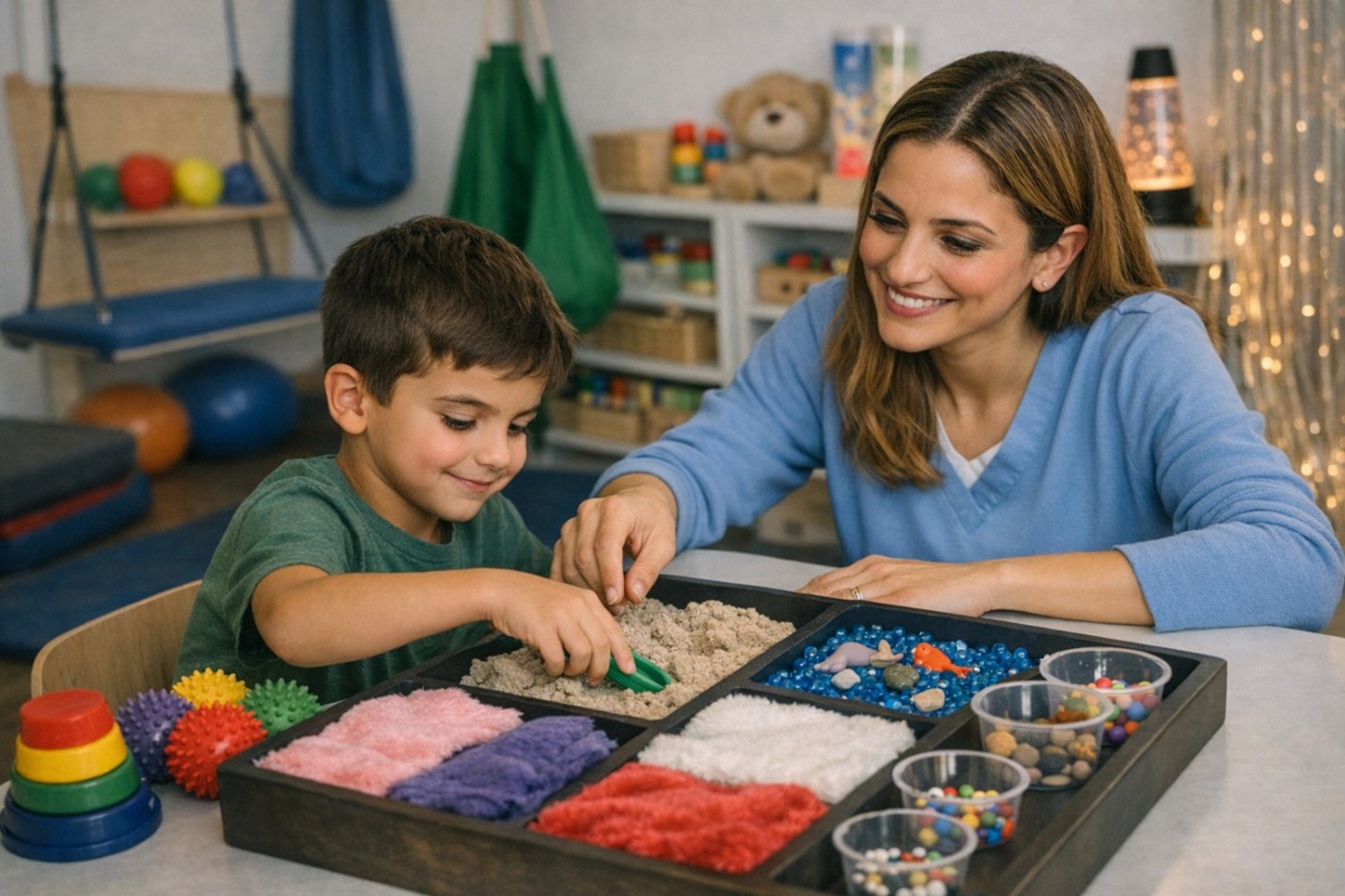
- Play-based motor skill development
- Sensory integration activities
- Hand strengthening and coordination exercises
- Task breakdown for complex activities
- Visual and environmental structuring supports
- School readiness training exercises
We ensure that therapy is meaningful and directly connected to real-life tasks rather than isolated clinical exercises.
🧑⚕️ Step-by-Step Occupational Therapy Process
We follow a structured process to ensure clarity and measurable development for every child.
1. Comprehensive Assessment
We evaluate sensory responses, motor skills, attention levels, and daily living abilities.
2. Individualized Therapy Plan
A personalized intervention plan is created based on developmental needs and functional goals.
3. Therapy Sessions
Sessions are conducted in a structured environment using targeted activities and guided practice.
1. Comprehensive Assessment
We evaluate sensory responses, motor skills, attention levels, and daily living abilities.
2. Individualized Therapy Plan
A personalized intervention plan is created based on developmental needs and functional goals.
3. Therapy Sessions
Sessions are conducted in a structured environment using targeted activities and guided practice.
4. Continuous Monitoring
We track progress using observable and measurable skill development markers.
5. Parent Collaboration
We provide regular updates and home strategies to reinforce therapy progress.
📊 Key Focus Areas in Occupational Therapy
| Area | Skill Focus | Therapy Method |
| Fine motor skills | Writing, gripping, hand control | Structured motor exercises and play activities |
| Sensory processing | Response to sound, touch, movement | Sensory integration therapy |
| Daily living skills | Dressing, eating, hygiene | Step-by-step guided practice |
| Attention skills | Focus and task completion | Structured task training |
| School readiness | Classroom participation | Simulation and functional activities |
👥 Multidisciplinary Collaboration
Occupational Therapy works best when combined with other developmental services. At Leo Kanner Center, we ensure full coordination between therapy disciplines.
We collaborate with:
- Speech and Language Pathology for communication development
- ABA therapy for behavior and learning support
- Early intervention programs for younger children
This integrated model ensures children receive consistent developmental support across all areas.
🏥 Why Parents Choose Our Occupational Therapy Program
Parents trust our Occupational Therapy services because we focus on practical outcomes that improve real-life independence.
What sets our approach apart:
- Functional skill development focused on daily life
- Individualized therapy based on detailed assessment
- Experienced therapists trained in pediatric development
- Structured sensory and motor integration programs
- Strong parent involvement and feedback system
We do not focus only on improvement inside the therapy room. We focus on independence at home and success at school.
We believe therapy is most effective when families are actively involved.
We support parents through:
- Home activity recommendations
- Sensory regulation strategies for daily routines
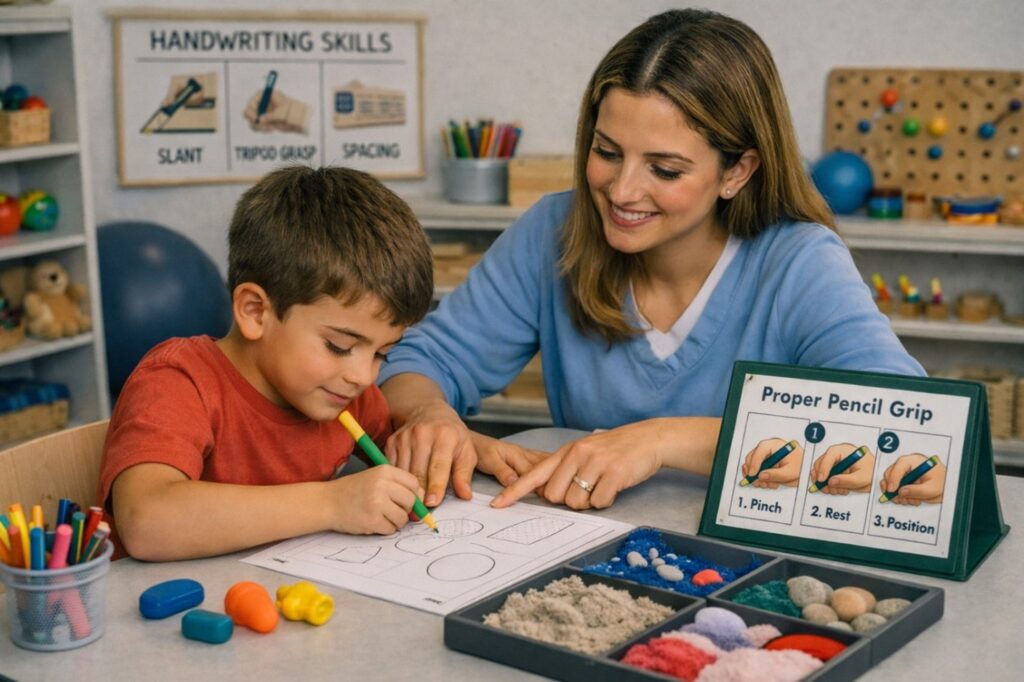
- Guidance for improving handwriting and motor skills
- Regular progress discussions and updates
Parents are guided on how to continue skill development naturally in everyday activities.
💬 Parent Involvement and Home Support
📈 Expected Outcomes from Occupational Therapy
With consistent therapy and family involvement, many children show improvements in:
- Handwriting clarity and fine motor control
- Ability to manage daily self-care tasks
- Improved focus and attention in school
- Better sensory regulation and emotional control
- Increased independence in daily routines
Our goal is long-term functional independence, not just short-term skill improvement.
📞 Start Your Child’s Independence Journey Today
If your child is struggling with handwriting, sensory challenges, coordination, or daily living skills, early Occupational Therapy support can significantly improve their development.
At Leo Kanner Center, we provide structured, evidence-based Occupational Therapy that focuses on real-life independence and confidence building.
📍 Conveniently located for families across Doha and nearby communities
📅 Flexible scheduling available for assessments and therapy sessions
📞 Contact us today to book an Occupational Therapy evaluation
We help children build the skills they need to do everyday tasks with confidence and independence.